
Most Popular Types of Jars
Mason Jars
Mason jars are the most recognized glass containers in kitchens. You’ll find them with a special two-part lid system that includes a flat metal disc and a screw-on band.
This design creates an airtight seal that’s perfect for home canning which work great for preserving food like fruits, vegetables, jams, and jellies.
It can also be used to store dry goods such as flour, sugar, and pasta in your pantry.
Common sizes:
- Half-pint (8 oz)
- Pint (16 oz)
- Quart (32 oz)
- Half-gallon (64 oz)
Kilner Jars
Kilner jars use a rubber ring that sits between the glass rim and the lid to create a tight seal.
It is used for storing dry foods like rice, beans, and pasta in your pantry.
Weck Jars
Weck jars use glass lids instead of metal, paired with rubber rings and metal clips to seal them shut.
The glass lid sits on top of a rubber gasket, and you secure it with stainless steel clips. This creates an airtight seal.
These jars are great for home canning, storing leftovers, or keeping dry goods fresh.
Apothecary Jars
Apothecary jars usually have wide bodies and tight-fitting lids that protect what’s inside.
You can use them in bathrooms to hold cotton balls, bath salts, or small soaps. In your kitchen, they’re perfect for storing pasta, tea bags, cookies, or candy.
Jar Materials Explained
Glass Jars
Glass jars remain the most popular choice for food storage and preservation. They don’t react with contents.
The environmental benefits stand out too. A glass jar can be recycled endlessly without losing quality.
Amber or dark-colored glass jars protect light-sensitive contents like essential oils or certain medications.
Plastic Jars
Plastic jars offer lightweight convenience at a lower cost than glass. You’ll find them easier to transport and less likely to break if dropped.
This makes plastic jars practical for travel, kids’ lunches, or outdoor activities. PET plastic jars provide crystal-clear visibility and work well for dry goods like nuts, spices, or craft supplies.
Ceramic Jars
Ceramic naturally regulates humidity to some degree, making these jars excellent for storing dry ingredients that can clump or degrade with moisture exposure. You’ll typically find ceramic jars with cork, wood, or rubber-sealed lids.
They’re heavier than other options and can chip or crack if mishandled.
Metal Jars
Metal jars, usually made from aluminum or tinplate steel, provide complete barriers against light, oxygen, and moisture. This protection extends shelf life significantly for sensitive products like loose-leaf tea, coffee beans, or cosmetic ingredients.
Shapes and Styles of Jars
Straight-Sided Jars
Straight-sided jars have walls that go straight up and down without any curves or angles. This simple design makes them one of the most practical options you can buy.
The flat sides of straight-sided jars make labeling very easy. Your labels stick smoothly to the surface and look clean and professional.
This is why many food companies and small businesses choose them for their products.
Key benefits of straight-sided jars:
- Stack efficiently without wasting space
- Look neat and organized
Hex Jars
Hexagonal jars have six flat sides that form a unique shape. This design sets them apart from regular round jars and makes them easier to hold.
The flat sides catch light in a way that makes your stored items look better.
French Square Jars
French square jars have four flat sides that meet at sharp corners. This boxy shape gives them a more upscale look than basic round jars.
Why choose French square jars:
- Add an elegant touch to any product
- Label easily on flat surfaces
- Take up less space than round jars
- Create a premium appearance
Paragon Jars
Paragon jars stand much taller than they are wide.
The narrow shape works great for tall items like candles, long cookies, and honey sticks.
Small businesses like the tall, clean lines of these jars. The shape makes products feel special and different from what you see in regular containers. This helps items stand out to customers.
Jar Lids and Closure Systems
Two-Piece Lids
Two-piece lids uses a flat metal disc with a sealing compound around the edge and a separate threaded metal band that screws on top.
Screw Caps
Screw caps are continuous-thread closures made from metal or plastic that twist directly onto jar openings. These one-piece lids feature threads that match the jar’s finish, creating a secure seal when tightened.
Twist-Off Lids
Twist-off lids look similar to screw caps but are specifically designed for commercial food packaging. These metal lids have a plastisol or compound lining that softens during heat processing to form a vacuum seal.
Clamp and Flip-Top Closures
Clamp closures use a metal wire mechanism with a hinged lever that locks down over a rubber or silicone gasket. These European-style closures, often called bail-and-trigger or swing-top lids, create pressure when you flip the lever down to secure the seal.
The rubber gasket sits in a groove on the jar’s rim and compresses tightly when the clamp engages. You can open and close these jars hundreds of times, and the gasket remains effective as long as it stays flexible.
Jars in Cosmetic Packaing
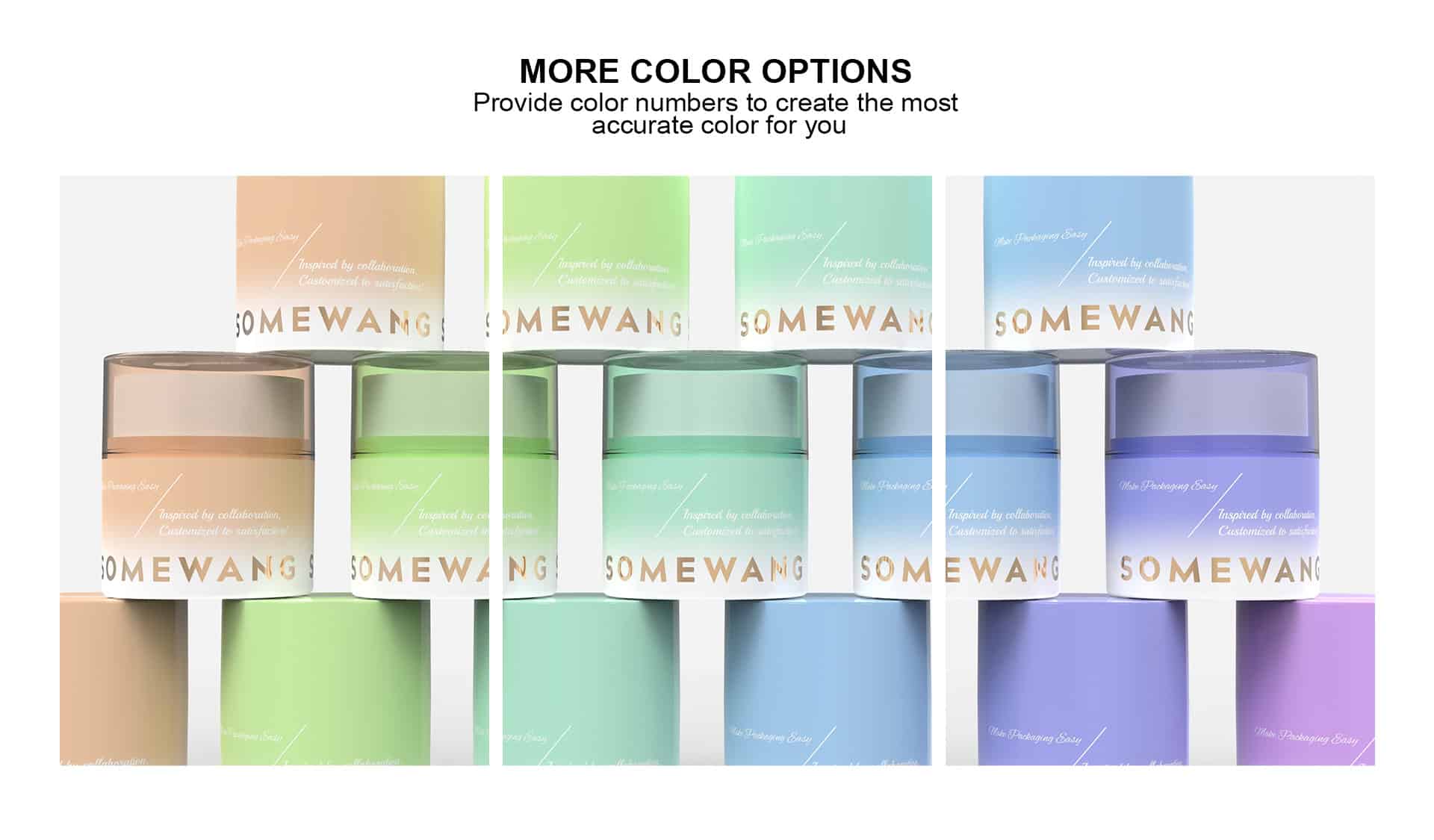
Jar packaging is a traditional and widely used format in the beauty industry, ideal for high-viscosity products like luxury night creams and thick hair masks that cannot be easily dispensed via pumps or tubes, offering a tactile “ritual” experience central to skincare and self-care routines.
Key material options include glass, polypropylene, acrylic, and aluminum. While glass jars excel in barrier properties and chemical inertness, plastic jars are more impact-resistant, lightweight, and cost-effective for shipping. Traditional jars face challenges of oxidation and microbial contamination, addressed through robust preservative systems and innovations like airless press jars, double-walled construction, and refillable pods.
For brands seeking reliable, innovative, and customizable cosmetic jar solutions that align with these industry advancements, visit somewang.com.
Somewang offer flexible OEM/ODM services, supporting custom logos, sizes, and finishes to elevate your brand identity.
How to Choose the Right Jar Type
Decision-Making Table
| Product Type | Recommended Jar | Structure | Key Benefits |
|---|---|---|---|
| Food | Clear glass jar with screw lid | Wide-mouth | Airtight sealing; food-safe; transparent display of contents |
| Light-sensitive products | Amber glass jar | Standard or narrow mouth | UV protection; preserves active ingredients |
| Skincare and candles | Frosted or colored glass jar | Wide-mouth | Premium appearance; partial light protection |
| Dry goods, crafts, tools | Plastic jar | Wide-mouth | Lightweight; shatter-resistant; cost-effective for shipping |
| Tea and coffee | Metal tin | Flat lid | Complete light blockage; excellent aroma preservation |
| Decorative storage | Ceramic jar | Wide-mouth | Strong visual appeal; ideal for retail display |